The Top 3 Laser Treatments for Stubborn Sun Damage


Sun damage is a common skin concern that many people face, especially those living in sunny climates like Houston. Prolonged exposure to the sun’s harmful UV rays can lead to various skin issues, including sun spots, hyperpigmentation, and premature aging. Fortunately, advancements in cosmetic dermatology have introduced effective laser treatments that can address these concerns with minimal downtime. In this article, we explore the top three laser treatments for stubborn sun damage: IPL, CoolPeel, and Laser Resurfacing.
1. Intense Pulsed Light (IPL) Therapy
What is IPL?
Intense Pulsed Light (IPL) therapy is a non-invasive treatment that uses broad-spectrum light to target and reduce the appearance of sun damage on the skin. Unlike traditional lasers that emit a single wavelength, IPL emits multiple wavelengths, allowing it to penetrate different layers of the skin. This versatility makes IPL an excellent choice for treating a variety of skin issues, including sun spots, age spots, and freckles.
What Does IPL Target?
IPL is particularly effective in targeting pigmentation irregularities caused by sun damage. The light energy is absorbed by the pigmented cells in the skin, which are then heated and destroyed. This process encourages the skin to rejuvenate, resulting in a more even and youthful complexion. IPL can also help improve the appearance of fine lines and reduce redness associated with rosacea.
Downtime and Recovery
One of the major advantages of IPL therapy is its minimal downtime. Most patients experience some redness and mild swelling immediately after the treatment, similar to a mild sunburn. These effects typically subside within a few hours to a couple of days. Patients can usually resume their daily activities immediately after the procedure, making IPL a convenient option for those with busy lifestyles.
2. CoolPeel CO2 Laser Treatment
What is CoolPeel?
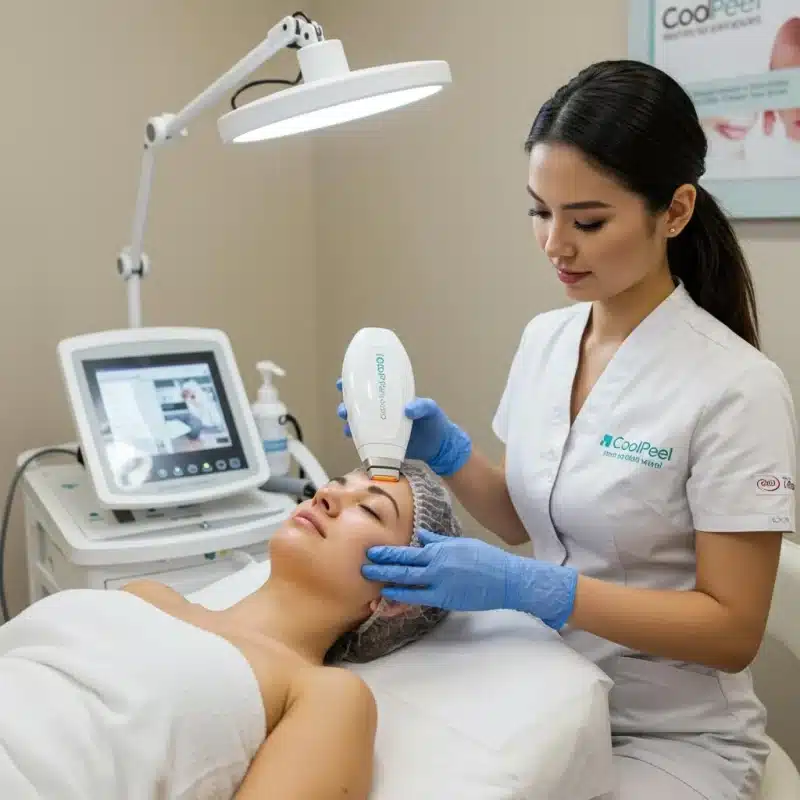
CoolPeel is a revolutionary CO2 laser treatment designed to minimize the appearance of sun damage and other skin imperfections without the extended downtime associated with traditional CO2 lasers. CoolPeel delivers controlled energy to the outermost layer of the skin, promoting collagen production and skin renewal.
What Does CoolPeel Target?
CoolPeel is effective in treating a range of skin concerns, including sun damage, fine lines, and uneven skin texture. By targeting the superficial layer of the skin, CoolPeel helps to remove damaged skin cells and stimulate the growth of new, healthy skin. This leads to a smoother, more radiant complexion with reduced pigmentation and improved skin tone.
Downtime and Recovery
CoolPeel offers the benefits of traditional CO2 lasers but with significantly less downtime. Patients may experience some redness and a rough texture on the skin immediately following the treatment, which typically resolves within a few days. Unlike traditional CO2 lasers that require weeks of recovery, CoolPeel allows patients to return to their normal activities much sooner, often within a day or two.
3. Laser Resurfacing
What is Laser Resurfacing?
Laser resurfacing is a popular procedure that uses concentrated beams of light to improve the texture and appearance of the skin. There are different types of laser resurfacing treatments available, including ablative and non-ablative lasers. Ablative lasers remove the outer layers of damaged skin, while non-ablative lasers stimulate collagen production without removing skin layers.
What Does Laser Resurfacing Target?
Laser resurfacing is highly effective in treating sun damage, reducing the appearance of sun spots, and improving overall skin tone and texture. It can also address deeper skin issues such as scars and deep wrinkles. By removing or stimulating the repair of damaged skin layers, laser resurfacing encourages the regeneration of new, healthy skin cells.
Downtime and Recovery
The downtime associated with laser resurfacing varies depending on the type of laser used. Ablative lasers typically require a longer recovery period, with patients experiencing redness, swelling, and peeling for a week or more. Non-ablative lasers, on the other hand, have minimal downtime, with most patients experiencing mild redness that subsides within a day or two. Patients are advised to follow post-treatment care instructions to ensure optimal results and a smooth recovery.
Conclusion
Sun damage is a common concern for many individuals, but with the right treatment options, it is possible to achieve healthier, more radiant skin. IPL, CoolPeel, and laser resurfacing offer effective solutions for targeting sun damage and improving skin appearance with minimal downtime. If you are considering laser treatments for sun damage, consult with a qualified dermatologist or skincare professional to determine the best option for your specific needs. Remember, protecting your skin from further sun exposure is crucial to maintaining the results and protecting your skin from future damage.